An Islamic funeral consists of the ritual washing (ghusl), the shroud (kafan), the funeral prayer and burial facing Mecca. Dutch law sets a minimum of 36 hours after death; the mayor can allow a shorter term after hearing a doctor and with the public prosecutor's agreement (article 17, Burial and Cremation Act).
Call +31 85 004 8099: you are automatically put through to the team of our regular funeral partner.
Good to know. RouwUitvaart.nl is not a notary, lawyer or legal adviser. We compile this information with great care, but you cannot derive any rights from it. Always check how things stand for your own situation, or ask a notary or lawyer.
Ghusl, kafan and the funeral prayer
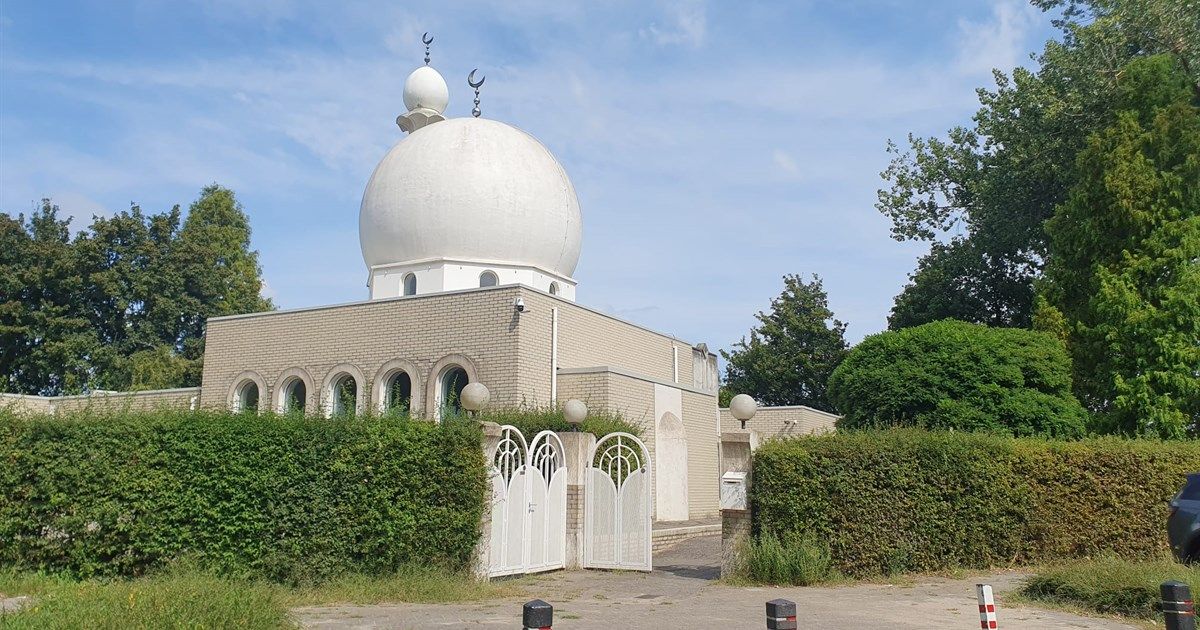
An Islamic funeral follows fixed, centuries-old rituals: the ritual washing, the shroud, the funeral prayer and burial facing Mecca.
Ghusl: the ritual washing
Shortly after the death, the body is washed with great care and respect, usually three times. Close relatives of the same sex or specially trained people do this, in the washing room of a mosque or a funeral centre.
Kafan: the shroud
Then the body is wrapped in a simple white shroud, the kafan: rich or poor, everyone goes to the grave in the same simplicity. Traditionally this happens without a coffin; whether a coffin is needed in the Netherlands differs per cemetery.
Salat al-janazah: the funeral prayer
The funeral prayer is said standing, without bowing, in the mosque or in the auditorium of a funeral centre, before the burial. Family, friends and members of the community join in. Islam does not permit cremation: an Islamic funeral is a burial.
How the Dutch time limit works for a quick burial
Islam asks for burial as soon as possible, ideally within 24 hours, but Dutch law works with a minimum term.
Under article 16 of the Dutch Burial and Cremation Act (Wet op de lijkbezorging), a burial takes place no earlier than 36 hours and no later than the sixth working day after death. Sooner is possible only with permission from the mayor (burgemeester) of the municipality where the deceased is, after hearing a doctor and in agreement with the public prosecutor (article 17); the mayor decides case by case. According to the Dutch government (Rijksoverheid), a bill called Wet bestemming lichamen overledenen, which is meant to replace the Burial and Cremation Act, would make the procedure for burial within 24 hours of death simpler; it is not law yet, so articles 16 and 17 still apply for now. More about these time limits: how soon a funeral takes place in the Netherlands.
Burial within 24 hours: how the permission works
Declaration of natural death
A doctor establishes the death and confirms that it was a natural death. Without this declaration, the burial permit requires a statement of no objection from the public prosecutor (article 12, Burial and Cremation Act).
Request to the mayor
The family or a funeral director asks the mayor of the municipality where the deceased is for permission to bury sooner, as soon as possible after the death.
Agreement of the public prosecutor
For a burial within 36 hours, the mayor first hears a doctor, and the public prosecutor (officier van justitie) must also agree.
Registration, permit and burial
After the death has been registered with the municipality and the burial permit (verlof tot begraven) has been issued, the burial can take place. How fast depends on the municipality and the time of death.
Burial in the Netherlands or in the country of origin?
An Islamic burial is possible in the Netherlands; families who want the grave in the country of origin choose repatriation.
The grave is laid out so that the deceased lies on the right side, facing Mecca. A right to a private grave (uitsluitend recht op een graf) can be granted for an indefinite period or for a fixed period of at least ten years; a fixed period is extended on a request made within two years before it ends (article 28, Burial and Cremation Act). For many Muslims lasting rest in the grave matters a great deal.
In Zuidlaren there is a fully Islamic cemetery, Riyad Al Jannah of the BIBIN foundation, where only Muslims are buried and where, according to BIBIN, graves remain for as long as the cemetery exists. General cemeteries in Amsterdam and Utrecht, among others, have an Islamic section.
Other families choose repatriation to the country of origin, for lasting rest in the grave there. The transport and the documents take time and bring their own costs. The team of our regular funeral partner can also set the repatriation in motion; read more about repatriation from the Netherlands.
What does an Islamic funeral cost?
Costs vary widely, depending on the cemetery, the region and whether you choose repatriation.
According to BIBIN, a grave at the Islamic cemetery in Zuidlaren costs €3,364 for an adult and €1,733 for a child, including the vault, memorial plaque and maintenance; elsewhere the rate differs per cemetery. Costs for the washing, guidance, transport and possibly the use of a room come on top.
According to the price list of a specialised repatriation company, repatriation costs from around €3,950 to Morocco and from around €4,550 to Turkey; ritual washing, the mosque and mortuary costs may come on top.
You find the fixed prices of our regular funeral partner on funeral costs in the Netherlands and, in Dutch, on wat kost een uitvaart: voorbeelden.
As with any funeral in the Netherlands, you are not obliged to use a funeral director (uitvaartverzorger), according to the Dutch government (Rijksoverheid). A funeral director can help with the quick-burial procedure and the choice of cemetery.
Questions about an Islamic funeral in the Netherlands
Islam asks for burial as soon as possible. Under article 16 of the Dutch Burial and Cremation Act, a burial takes place no earlier than 36 hours and no later than the sixth working day after death. A shorter term is possible only with permission from the mayor, after hearing a doctor and in agreement with the public prosecutor.
Only with permission. Under article 17 of the Burial and Cremation Act, the mayor of the municipality where the deceased is can allow a shorter term after hearing a doctor; within 36 hours the public prosecutor must also agree. It is not automatic, so start the request straight away.
Usually in the washing room of a mosque or a funeral centre, shortly after the death. Close relatives of the same sex or people trained for it wash the body with care and respect, usually three times. Then the body is wrapped in a white shroud and the funeral prayer follows.
Yes. In Zuidlaren there is a fully Islamic cemetery where only Muslims are buried and where, according to BIBIN, graves remain for an indefinite period. General cemeteries in Amsterdam and Utrecht, among others, also have an Islamic section; grave terms and available space differ per location.
Traditionally an Islamic burial takes place without a coffin, with the deceased wrapped in a white shroud (kafan) and facing Mecca. In the Netherlands this differs per cemetery and municipality: some allow burial without a coffin, others ask for a simple coffin. The funeral director can tell you what is possible at the chosen cemetery.
Under Dutch law, a right to a private grave can be granted for an indefinite period or for at least ten years; a fixed term can be extended (article 28, Burial and Cremation Act). Which terms are available differs per cemetery. At the Islamic cemetery in Zuidlaren, according to BIBIN, graves remain for as long as the cemetery exists.
Repatriation to the country of origin is possible; some families choose it for lasting rest in the grave. Where and when the washing and the prayer take place, you agree with the funeral director. Transport and documents for repatriation take time and cost money. The team of our regular funeral partner can also set it in motion.
According to BIBIN, a grave at the Islamic cemetery in Zuidlaren costs €3,364 for an adult and €1,733 for a child, including the vault, memorial plaque and maintenance. At other cemeteries with an Islamic section the rate differs per cemetery. Costs for the washing, guidance and transport come on top; repatriation has its own costs.
Lees dit in het Nederlands: Islamitische begrafenis: regels, verloop en spoed
More in English
These pages explain the same subjects in English. All other pages on this site are in Dutch.