After a death in a Dutch hospital, the doctor on duty confirms the death; you do not call a family doctor. Your loved one goes to the hospital mortuary. Collection, registration with the municipality (gemeente) and the funeral are up to you.
The funeral can wait; the care and cooling cannot. Via +31 85 004 8099 you are automatically put through to the team of our regular funeral partner.
Good to know. RouwUitvaart.nl is not a notary, lawyer or legal adviser. We compile this information with great care, but you cannot derive any rights from it. Always check how things stand for your own situation, or ask a notary or lawyer.
Six steps after a death in a Dutch hospital
The hospital deals with the medical part; collecting your loved one, the registration and the funeral follow in six clear steps.
The doctor on duty confirms the death; you do not call a family doctor (huisarts). Ask the nurse how long you can stay with your loved one in the room. Take jewellery, a phone and other belongings home yourself.
The funeral can wait; the last care and the cooling cannot. According to information from several hospitals, the mortuary starts cooling after about three hours, at the relatives' expense.
Home for a viewing, with professional cooling or after embalming (thanatopraxie), to a funeral centre (rouwcentrum), or straight to the crematorium or cemetery. You choose the funeral director yourself, even if a funeral company runs the mortuary.
In practice the hospital does not register the death. Someone who knows of the death first-hand does that, or authorises the funeral director to do it (article 1:19h, Dutch Civil Code), in the municipality where the death took place (article 1:19f).
The municipality draws up the death certificate (akte van overlijden) and issues the permit for burial or cremation. The permit itself is free of charge, and without it the funeral may not take place (article 11, Dutch Burial and Cremation Act). Ask for several copies of the death certificate straight away.
The funeral takes place no earlier than 36 hours and no later than the sixth working day after death (article 16, Dutch Burial and Cremation Act); according to the Dutch government (Rijksoverheid), weekends and public holidays are not working days. The mayor can, after hearing a doctor, set a different term (article 17); within 36 hours only in agreement with the public prosecutor.
With our regular funeral partner, a transfer at the weekend or between 11 pm and 6 am costs €125 extra; the transfer can also be arranged as a separate service (page in Dutch).
The hospital mortuary and the three-hour point
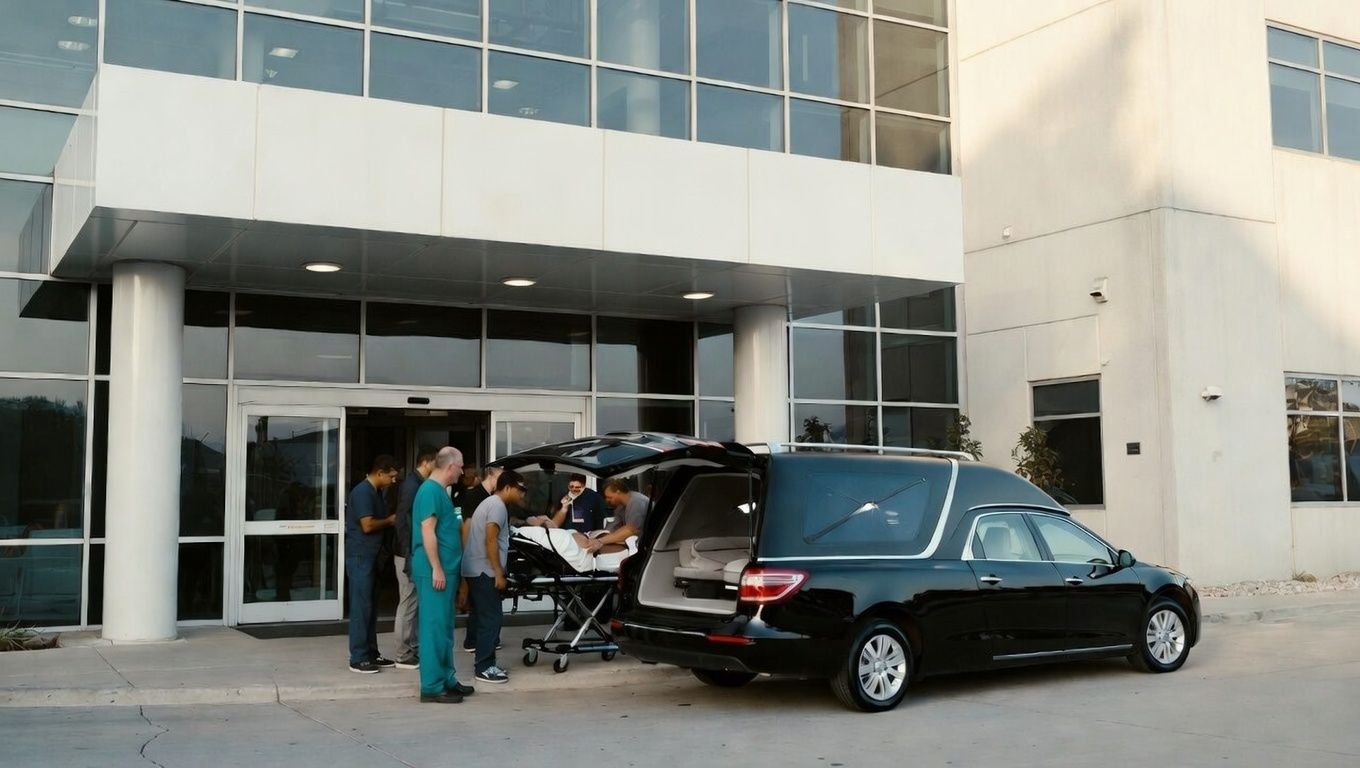
A mortuary is a room where a deceased person is kept, cared for and, if needed, cooled until the funeral director collects them; in a hospital it is a stopover, not a final destination.
Why it helps to call early
Several hospitals say in their information for relatives that the mortuary starts cooling if your loved one is not collected within about three hours, that the relatives pay for it and that health insurance (zorgverzekering) does not reimburse it. The rate differs per hospital; ask the mortuary, or let the funeral director ask.
Whether you can visit your loved one in the hospital mortuary differs per hospital; ask the mortuary.
Post-mortem, organ donation and a non-natural death
A post-mortem at the hospital's request in principle needs consent, and a non-natural death brings in the municipal coroner.
- Post-mortem (obductie): a post-mortem at the hospital's request is in principle only carried out with consent, from your loved one during life or otherwise from the partner or the closest relatives (articles 72 and 73, Dutch Burial and Cremation Act). You may refuse.
- Non-natural death: the doctor calls in the municipal coroner (gemeentelijke lijkschouwer). If the coroner cannot issue a certificate of death either, the permit for burial or cremation is only issued after a declaration of no objection from the public prosecutor (articles 10 and 12, Dutch Burial and Cremation Act). Until the public prosecutor or an assistant public prosecutor gives permission, your loved one may not be moved (article 76).
- Organ donation: according to the Dutch Transplant Foundation (Nederlandse Transplantatie Stichting), relatives do not receive a bill for the donor operation.
What a funeral costs after a death in hospital
The usual prices apply after a death in hospital too: a cremation arranged entirely yourself costs from around €800, and the fixed options of our regular funeral partner start at €2,000; any costs of the hospital mortuary come on top.
- Cremation, arranged entirely yourself: from around €800
- Cremation without a service, fully arranged: €2,000
- Simple burial, general grave included: €3,900
- Burial with a farewell service: €6,000
- Cremation with a farewell service: €7,500
- A complete home viewing with care and cooling, as a separate service: up to around €1,200
The fixed options can be adjusted to your wishes; see funeral costs in the Netherlands or the examples of what a funeral costs (in Dutch). No insurance and too little in the estate? See funeral without insurance.
Does funeral insurance cover the costs after a hospital death?
Whether someone dies in hospital or at home, the policy conditions determine what funeral insurance pays, including whether the costs of the hospital mortuary are covered; ask the insurer.
- Capital policy (kapitaalverzekering): pays out a sum of money to the beneficiary named in the policy; the policy conditions determine the amount and how it is paid out.
- In-kind policy (naturaverzekering): provides funeral services rather than a sum of money. Call the insurer first: the policy conditions determine what is covered, whether you can choose another funeral director and what the insurer then pays.
Read more about funeral insurance in the Netherlands.
Questions about a death in a Dutch hospital
The doctor on duty confirms the death, and your loved one is moved to the hospital mortuary. According to information from several hospitals, the mortuary starts cooling if your loved one is not collected within about three hours. You decide where your loved one goes next: home, to a funeral centre or straight to the funeral.
That differs per hospital. The mortuary is a stopover until you decide where your loved one goes. According to information from several hospitals, cooling starts after about three hours, at the relatives' expense. Ask the mortuary itself about its terms, its rate and whether you can visit there.
According to hospital information, relatives are not charged for the first necessary care in the first hours. After that, the relatives pay for the mortuary and the cooling, at a rate that differs per hospital, and health insurance does not reimburse this. Funeral insurance may cover it; check the policy conditions or ask the insurer.
Usually, yes. You can stay with your loved one in the room for a while, but in practice hospitals often want the room free fairly soon, so ask the nurse how long you have. At home or in a funeral centre there is more time for your goodbye.
The doctor on duty fills in the certificate of death (verklaring van overlijden, the A form). The B form on the cause of death is meant for Statistics Netherlands (CBS), not for the municipality. With the A form, the municipality draws up the death certificate and issues the permit for burial or cremation.
Yes, laying out at home is allowed after a hospital death too. Your loved one is brought home from the mortuary and laid out with professional cooling or after embalming (thanatopraxie). A funeral director arranges the collection, the last care and the cooling. A complete home viewing costs up to around €1,200.
Not for the funeral itself: its type and its costs can wait. It does help to arrange the collection soon, because, according to information from several hospitals, the mortuary starts cooling after about three hours, at your expense. You choose who collects your loved one. With an in-kind policy, call the insurer first.
In practice, no. The hospital records the death internally; a relative who knows of the death first-hand, or a funeral director authorised to do so, registers it with the civil registry. That happens in the municipality where the death took place, not where the deceased lived; that municipality passes it on to the municipality of residence.
Lees dit in het Nederlands: Overlijden in het ziekenhuis: wat moet u nu doen?
More in English
These pages explain the same subjects in English. All other pages on this site are in Dutch.